Tag: money

  • 9 Secret Cash Back Sites That Pay You Up to 40% Extra on Black Friday 2025

    9 Secret Cash Back Sites That Pay You Up to 40% Extra on Black Friday 2025

    Before you hit “checkout” on your cart, stop and think twice. If you’re still shopping in 2025 without using a cash back site, you’re leaving hundreds of dollars on the table.

    Black Friday is already packed with massive deals — the best time of the year to shop — but stacking cash back on top literally makes a world of difference. These sites can turn your Black Friday haul 20–40% cheaper without any extra effort.

    In this article, I’m sharing the 9 best cash back sites and apps that deliver the highest real savings in 2025. Most pay you through PayPal, Venmo, direct deposit, or gift cards once you reach a tiny minimum (usually just $5–$20). Here are the top 9, ranked by reliability, payout speed, and how much extra cash you’ll actually pocket. (Pro Tip: compare cash back rates on different websites before you make the purchase.)

    These websites focus on “cash” back. If extra rewards are your bread and butter, stay tuned for the next article on the top shopping portals/rewards programs in 2025 that pay you in extra points/miles instead of straight cash back.

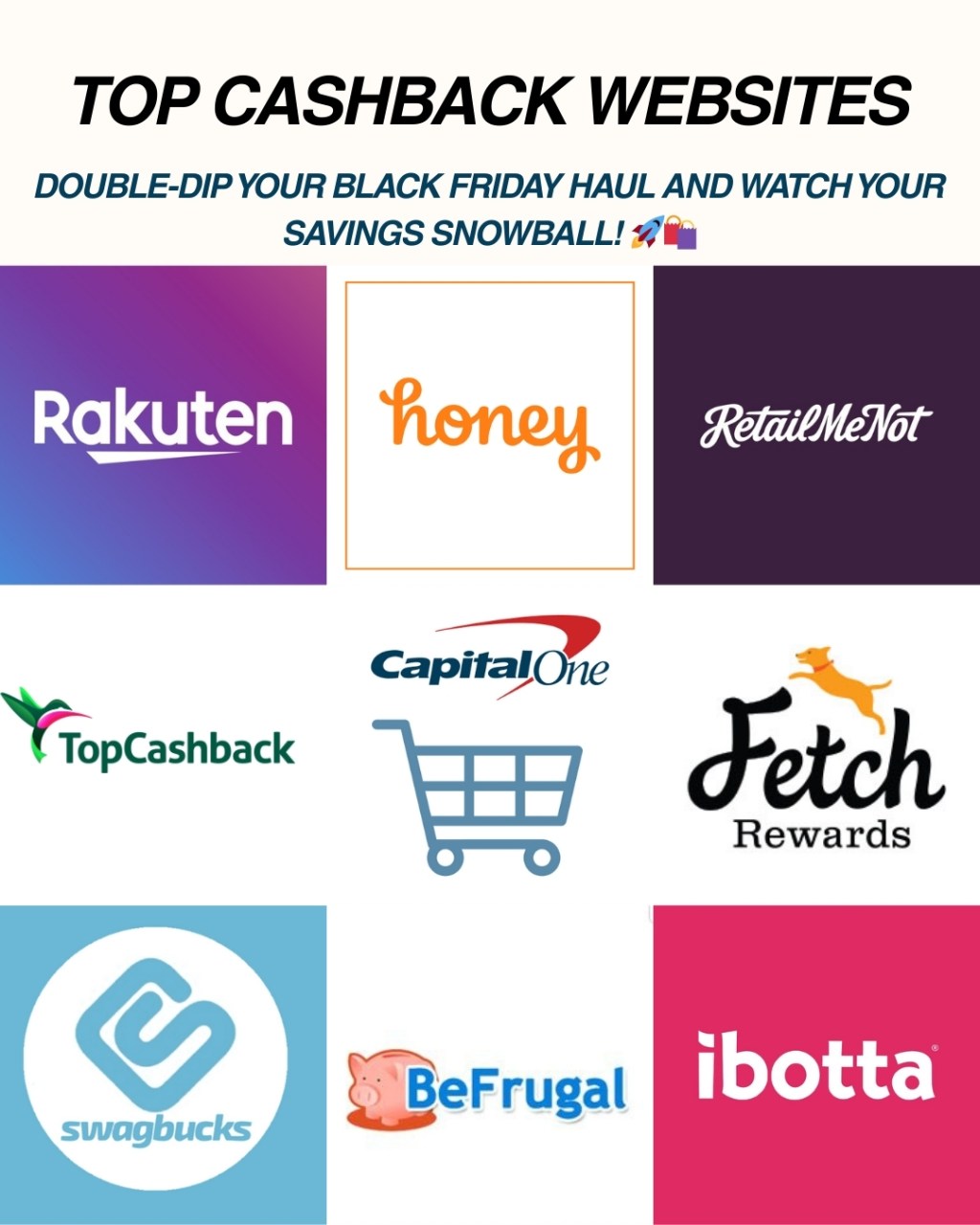
    1. Rakuten (the undisputed king)

    • Partners: 3,500+ stores (Macy’s, Walmart, Nike, Apple, etc.)
    • Typical cash back: 1–15%, spikes to 20–40% on Black Friday
    • How you get paid: Big fat check or PayPal every 3 months (they literally mail you a check if you want)
    • Why it’s great: Highest double-cash-back events of the year, foolproof browser extension, and a $40 welcome bonus after your first $40 spent.

    2. TopCashback (highest rates, zero catch)

    • Partners: 7,000+ stores including Apple, Samsung, Adidas
    • Typical cash back: Often 1–3% higher than Rakuten on the same stores
    • How you get paid: No minimum for PayPal, ACH, or gift cards – cash out $0.01 if you want
    • Why it’s great: Passes 100% of the commission to you (most sites keep a cut), making it the highest-paying portal in the U.S.

    3. Capital One Shopping (set-it-and-forget-it)

    • Partners: 30,000+ sites including Amazon, Target, Best Buy
    • Typical cash back: 1-15% + auto-applies coupons
    • How you get paid: Gift cards or statement credits
    • Why it’s great: Free browser extension works in the background, finds better prices, and stacks with your credit card rewards.

    4. Honey (now part of PayPal)

    • Partners: 40,000+ stores
    • Typical cash back: Honey Gold points → redeem for gift cards
    • How you get paid: Gift cards (Amazon, Walmart, Target, etc.)
    • Why it’s great: Automatically tests every coupon code at checkout + quietly earns you Gold points that turn into free money.

    5. RetailMeNot

    • Partners: 20,000+ stores + huge Black Friday “Cash Back Day” boosts
    • Typical cash back: 2–20%
    • How you get paid: PayPal or Venmo (usually within 45 days)
    • Why it’s great: Massive coupon library + legit cash back that often jumps 10–20% during November events.

    6. Ibotta (grocery + online hybrid beast)

    • Partners: Walmart, Target, Best Buy, Sam’s Club, hundreds more
    • Typical cash back: 1-25% online, plus any-receipt bonuses
    • How you get paid: PayPal, Venmo, or gift cards as soon as you hit $20 (often faster with bonuses)
    • Why it’s great: Works for online pickup/delivery orders and in-store – perfect for stacking on Black Friday grocery runs.

    7. BeFrugal (underrated gem)

    • Partners: 5,000+ stores
    • Typical cash back: 1–40% + exclusive coupons
    • How you get paid: PayPal, Venmo, check, or gift cards ($15 minimum)
    • Why it’s great: Frequently beats Rakuten and TopCashback by 1–5% and has a $20 sign-up bonus right now.

    8. Swagbucks (the all-in-one earner)

    • Partners: 10,000+ stores
    • Typical cash back: 1–12% in SB points
    • How you get paid: PayPal cash or gift cards (as low as $3)
    • Why it’s great: Shop + do quick surveys or watch videos to stack even more – people routinely cash out $50–$200/month.

    9. Fetch Rewards (receipt snapping simplicity)

    • Partners: Any online or in-store receipt (Walmart, Amazon, Target, etc.)
    • Typical cash back: 25-5,000+ points per receipt, plus brand-specific offers
    • How you get paid: Gift cards from $3
    • Why it’s great: Just snap your Amazon or Walmart receipt and get points even if you forgot to click through a portal – the ultimate safety net.

    Pro Move for Black Friday 2025

    Use CashbackMonitor.com or the browser extension “Cashback Tracker” before every purchase – it instantly shows which of the 9 sites above is paying the highest rate for that exact store in real time. Stack that with a cash-back credit card and you’re looking at 10–50% off everything.

    Start with Rakuten or TopCashback for pure online shopping, add Capital One Shopping extension for autopilot, and throw Ibotta or Fetch on top for receipts. Do that this Black Friday and you’ll literally get paid hundreds just for shopping like normal.

    Happy stacking – your wallet will thank you!
  • My Husband and I never fight about money – here are our secrets

    My Husband and I never fight about money – here are our secrets

    Money can be a major tension point for many couples. A 2023 survey by Suntrust Bank found that 54% of people believe that having a partner in debt could be a reason for a divorce. Another Fidelity’s 2024 Couples and Money Study shows that 45% of partners say they argue about money at least occasionally, and over one-quarter list money as their biggest relationship challenge. Money can be a sensitive and stressful topic between couples, which is why it’s even more important to set the ground rules before you chart the course of marriage.

    As Aries and Cancer, we bicker about the most ridiculous things, but we’re always on the same page with money. Here are a few of our “secrets” that I’d like to share with you.

    We follow the $50 rule

    In the very early days of our relationship, my husband (then boyfriend) shared an article with me about something called the “$50 rule.” The gist was simple: this couple would let each other know before making any purchase over $50. Of course, there were exceptions – gifts and surprises didn’t count, though they kept those reasonable too.

    I’ll admit, when we were dating, I was the bigger spender (not dramatically, just… noticeably😅). In hindsight, that’s probably why he shared this article with me, haha… and we both willingly started following this rule. Over time, this little rule laid a strong foundation for our relationship and marriage, and I’m genuinely grateful we started it early.

    Ten years have passed since we first set our $50 rule. Has the world gotten more expensive? Absolutely — even the $8 pho in Philly has more than doubled. Are we changing the rule? Absolutely not. It’s become second nature at this point, and we love it that way.

    We are aligned on “wants” vs “needs”

    We try hard to distinguish between “wants” and “needs.” It keeps our spending intentional and our goals aligned. This was another concept my husband introduced back when we were dating – which, when I say it out loud, wow, really makes me wonder just how reckless he thought I was with my spending at the time… Hold on, where is he? I’ll be right back…🤣

    I actually miss those days when so many “wants” we couldn’t afford would end up on our Christmas wishlist. While I’m grateful for how far we’ve come financially and how it’s easier for us to have occasional treats, celebrating Christmas or anniversaries somehow feels a lot trickier these days. Is it because we’re no longer broke students and have become parents, or because our wants now come with a bigger price tag (cough, cough, dream house)?

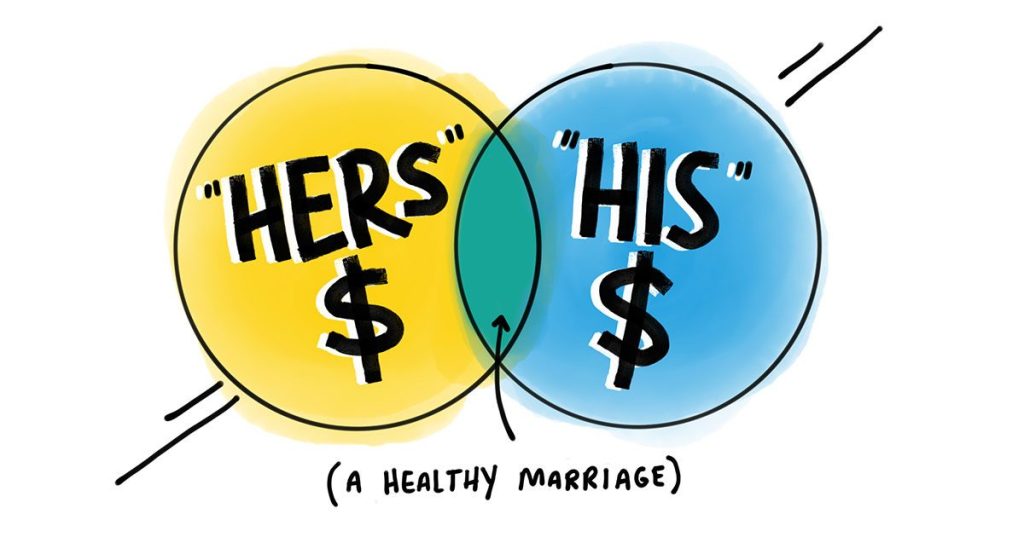
    Our accounts are shared

    We’re sharing our lives, so sharing our finances was a natural step. It keeps us aligned, transparent, and moving in the same direction. We love how we work so well as a team, and because we don’t really have stressful arguments about money, our love for each other blossoms even more over time.

    We use Empower (formerly Personal Capital) to track all of our accounts. It’s completely free, or at least we use the free version. You can link every category of your personal finances – credit cards, bank accounts, investment and retirement accounts, car loans, and mortgages, and the app or website gives you a complete view of your net worth, assets, and liabilities. Since we share all our accounts, there are no surprises that might cause a heart attack. Although… I’m still waiting for my husband to admit he has a secret stash of money somewhere. Wouldn’t that be nice? Don’t worry, babe, I promise I won’t be mad!😃

    Mutual respect = no power play

    No “I make more” energy, no scorekeeping. We value each other’s needs (and our families’ needs) equally – that’s real partnership. Every time we let each other know we’re about to make a purchase over (or way over) $50, the other person almost always says, “Sure, go ahead,” because the respect we have for each other comes with 100% trust.

    Once in a while, we have a dedicated conversation just about money. We review our current financial picture, income trajectory, investments, and the kids’ education fund. We also dream about the day when work becomes optional and we can FAT FIRE – that is, retire early while still living comfortably. Coming from humble backgrounds, these conversations bring us even closer.

    Every marriage is unique, and what works for ours might not work for yours. But one thing is clear: open communication, mutual respect, and shared financial goals can make a world of difference. What “secrets” or strategies for financial success in marriage have worked for you? We’d love to hear your insights and tips – let’s keep the conversation going!

  • What Motivates You to Save Money?

    What Motivates You to Save Money?

    Saving money is one of the most powerful steps toward building real wealth. While “saving” might sound dull or restrictive, it doesn’t have to be—especially when you have the right motivations behind it.

    A penny saved is a penny earned.

    I first came across this quote by Benjamin Franklin in my early twenties—though his original words were phrased a little differently. At the time, I had just finished grad school and was earning $45,000 a year. A pay raise felt like a distant dream. The only immediate way to see more money in my bank account was simple: save what I earned.

    But here’s the thing—our brains don’t naturally want us to save. There’s science behind that. We’re hardwired for comfort and instant gratification, not for delayed rewards. Corporations understand this all too well. They make spending frictionless: one-click checkouts, instant payment systems, and same-day delivery—all designed to help you part with your money effortlessly.

    As a twenty-something, of course I loved shopping too. I spent many afternoons walking through Center City Philly, browsing boutique stores on my days off. Luckily, Ben Franklin’s quote kept me in check and helped me build a habit of saving early on. I did plenty of window shopping and stayed up to date on fashion trends, but I learned to pause before buying. Every time I stopped to ask myself, “Do I need this, or do I just want it?”—I was training my financial discipline.

    And here’s a small but important tip: if you buy something new and change your mind after a few days, return it. It might sound obvious, but you’d be surprised how many people let new purchases sit unused, tags still on, until it’s too late. Taking advantage of return policies isn’t just about getting your money back—it’s about respecting the value of your hard-earned cash.

    As James Clear once said in his book Atomic Habits, “You should be far more concerned with your current trajectory than with your current results.” That mindset kept me going. Even when my savings seemed small, I knew I was moving in the right direction.

    More money saved = more can be invested.

    Albert Einstein once said, “compound interest is the eighth wonder of the world”. He wasn’t exaggerating. If you save $500 a month, that adds up to $6,000 a year—or $180,000 over 30 years.

    But here’s where it gets exciting: if you take that same $500 each month and invest it in a mutual fund averaging a 10% annual return, after 30 years you’d have $986,964—almost a million dollars! That’s the magic of compounding.

    Understanding how money saved and invested can snowball over time is one of my biggest motivations to save. Each dollar set aside isn’t just a dollar—it’s the seed of future growth. Knowing that if I choose not to spend a $20 bill today, it could become $25 just a few years later (at a 10% return, that’s about 2 years and 4 months) keeps me encouraged to save more—and to start now.

    Looking back, I’m grateful I learned the value of saving early. In my twenties, it wasn’t always easy to say no to things I wanted in the moment, but those small decisions added up. Each time I chose to save instead of spend, I wasn’t just growing my bank balance—I was shaping my mindset. Over time, saving stopped feeling like a restriction and started feeling like empowerment. It gave me confidence, freedom, and a sense of control over my future. And even now, years later, that same motivation—the one that started with a simple Ben Franklin quote—still reminds me that every dollar I choose to keep is a quiet investment in my future self.

    What motivates you to save? Share your thoughts in the comments—I’d love to hear your story.